Mental health is not only a health issue, but an economic issue, a workforce issue and a productivity issue.
Across the UK, people are struggling with poor mental health while continuing to manage their everyday lives. Rising financial pressures are forcing a choice between protecting health and juggling life responsibilities, resulting in delayed treatment, worsening conditions and a rising cost of ill-health for employers, the healthcare system and the wider economy.
Mental ill health costs the UK economy more than £16 billion every year and leads to 17.6 million lost working days through sickness absence. More than 33 million productivity-equivalent days are lost through presenteeism, where people continue working despite struggling with their health.
Almost one million workers are currently living with a work-limiting mental health condition, yet pushing themselves to continue coping. The 2026 Bupa Wellbeing Index found that more than half of employees have delayed seeking support to avoid the disruption of time away from work, and 41% have worked through illness rather than take sick leave.
Yet, conditions left untreated often leads to worse outcomes, where individuals need extended time away or sadly, leave the workplace altogether. The research found that younger workers are particularly affected. Adults under 35 account for more than a third of all mental health-related absence, equating to an estimated cost of over £6 billion annually.
Jo Stoddart, Director for Healthcare Development at Bupa said: “Too many people are paying the cost of coping rather than seeking support when symptoms first surface. Our research shows the stark reality of what this means for the individual, the workplace and the economy. It’s the reason that preventative care and early intervention are so important.
“There is no single solution; workplaces, healthcare providers and the government need to work together for practical solutions that empower people to seek support in early stages, not delay until its urgent. It means recognising that investment in mental health is not simply a cost to be managed; it is a long-term investment in people, productivity and economic growth.
“At Bupa, we’re committed to supporting a preventative approach to mental health. Our Mindplace mental health centres are opening across the UK for face-to-face services, while our Blua app offers virtual mental health support giving people flexibility, preference and comfort in how they access care. We also provide mental health cover as standard within Bupa health insurance. By making a breadth of services easy to access, our aim is to help people receive the care they need early, keep them well and in work, and support better health outcomes.”
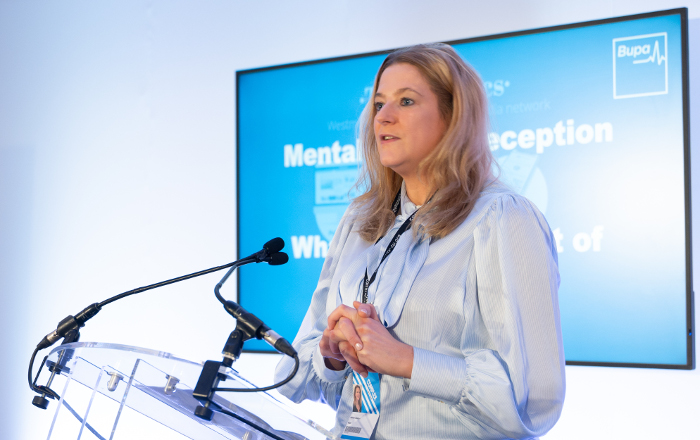
This week, Bupa hosted a mental health reception at the Labour Party conference to launch these insights, calling on the government, employers and healthcare providers to work together to expand fast access to care. In improving health outcomes, we build a more resilient economy.
You can read our Bupa Mental Health manifesto, where we outline the scale of the issue and our asks to the government to support positive mental health.