Partnering for change
Collaborating and innovating in our industry and beyond
We actively engage in various partnerships, using our industry expertise to help drive systemic, sustainable change in healthcare.
Our partnerships
We work closely with others, collaborating and advocating for change through coalitions, forums, and associations.
Sustainable Markets Initiative (SMI)
We joined the Sustainable Markets Initiative (SMI) Health Systems Task Force in 2023, a public-private partnership of global health leaders taking joint, scalable action to accelerate the delivery of net zero health systems – to improve individual, societal and planetary health.
We continue to work with them on initiatives including supply chain decarbonisation, patient care pathways decarbonisation, and consumer health and wellbeing.
Through the SMI, we also supported the launch of the European Network for Climate and Health Education. This network, chaired by the University of Glasgow and supported by the World Health Organization, is working with 25 leading universities to equip over 10,000 medical students with the skills to address the health impacts of climate change.
More about the Sustainable Markets Initiative (SMI)Norman Foster Foundation
With cities housing over half the global population, urban action is key to supporting people’s health in changing climate.
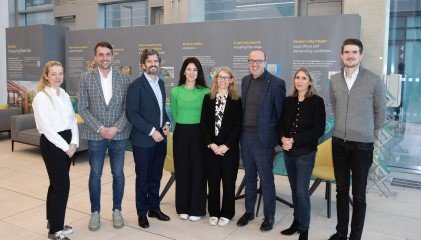
That's why we are working as health partner for the Norman Foster Institute for Sustainable Cities programme, delivering health-related course content, lectures, and workshops. This initiative, now in its second year, aims to equip the next generation of future city leaders, architects, planners, and engineers with the skills to create greener, healthier, and climate-resilient cities.
2024 Partnership Impact Report
More about the Norman Foster FoundationHealth Care Without Harm
In 2024 we announced a new phase in our partnership with global NGO, Health Care Without Harm, as part of its efforts to work with others in shaping the delivery of healthcare to benefit people and planet health.
By partnering with Health Care Without Harm, we aim to scale local, on-the-ground action that will tackle emissions and reduce the environmental impact of healthcare, including a focus on single-use items, patient travel, hospital emissions and anaesthetic gases.
More about Health Care Without HarmResilient CitiesReimagining health
In 2025, we launched the Resilient Cities, Reimagining Health programme, a multi-year partnership between the Sustainable Markets Initiative and the Resilient Cities Network, with support from from Yale School of Public Health and other partners.
The partnership is working directly with 32 cities across 22 countries to implement preventative health interventions in cities that improve health, reduce emissions, build health systems and resilience, and support cities with tools, guidance and evidence needed.
In September 2025, the partnership published its first report. The Case for Action: The Power of Prevention to Support Health in a Changing Climate. This set out new research highlighting how prevention could save 725,000 lives and $70 billion in healthcare costs, cutting emissions, improving equity and enhancing economic growth.
Camden Breathing Better
A local pilot project spearheaded by the Sustainable Markets Initiative is bringing together community groups, businesses and clinicians to tackle air pollution and improve respiratory health.
In this film, we tell the story of the people behind the Camden Breathing Better pilot, and look at the potential for one neighbourhood to create a global blueprint for change.
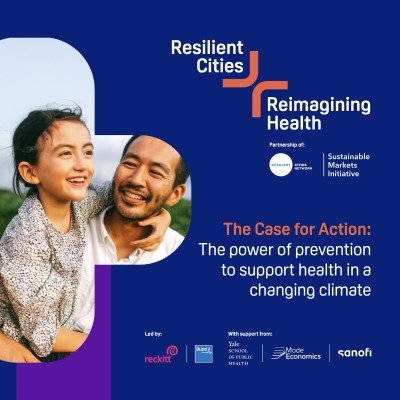
Resilient Cities – The Case for Action
The Case for Action report highlights the power of prevention to support health in a changing climate and reveals how practical, city-led interventions can ease pressure on health systems while delivering major health and climate benefits.
The Norman Foster Institute andHealthy Cities
Bupa, as the exclusive health partner of The Norman Foster Institute Programme on Sustainable Cities and, brings a clinical voice to the curriculum, helping to educate on the health impacts of climate change on urban populations and highlighting interventions that can mitigate health issues.
Investing ininnovation
Bupa is contributing to innovations that support people and planet health through global partnerships and research collaborations.
In 2025 we analysed how innovation can shift care toward prevention and climate adaptation, including through a flagship World Health Assembly roundtable co-hosted with Foreign Policy – a global affairs publication.
Insights from this informed our report Future-Proofing Health Care, which highlights that community-based prevention is essential, current efforts remain fragmented, and cross-sector collaboration and targeted finance are needed to scale climate-smart, equitable healthcare.
Driving urban healththrough collaboration

In 2025, Lux Med published the latest Polish Healthy Cities Index with researchers from the Warsaw School of Economics and the University of Economics in Kraków, assessing how 66 cities support healthy, sustainable and high‑quality urban living.
The report shows meaningful progress on air pollution, public safety and green space, while also highlighting demographic shifts such as ageing populations and changing migration patterns.
Through this partnership, we help local authorities design healthier, more liveable urban environments that improve everyday conditions for local communities.