Healthy people need a healthy planet
Reducing our impact and restoring nature
Our health and the health of the planet are deeply connected.
We’re continuing to take action to help create a net zero, climate-resilient, and circular health system, delivering the best quality of care for people in a changing climate.
Our approach
Investing in nature is a foundational driver of good health. Our approach focuses on restoring and protecting nature, reducing our impact on the environment and driving sustainable healthcare.
We are committed to intentional activities that protect and restore nature and positively impact water and air quality to create healthy environments that benefit human health. These initiatives are aimed at helping safeguard biodiversity and recovering natural ecosystems that help communities adapt to and build resilience to climate change.
Bupa remains committed to becoming a net zero organisation by 2040 and achieving our science-based targets, which have been validated by the Science-Based Targets Initiative (SBTi). We continue to work towards reducing our environmental impact while maintaining high-quality care for our customers. We will do this by focusing on areas where we can make the biggest difference for people and the planet.
Our sustainable healthcare approach focuses on practical solutions to reduce the environmental impact of healthcare and supporting others to do the same. In 2024, we launched the 'Single-use Switch' initiative to replace single-use items across our provision businesses with more sustainable alternatives, aiming to save millions of items from landfills or incineration.
We also released three sustainable healthcare educational films aimed at healthcare professionals, highlighting the relationship between people and planet health and showcasing actionable solutions to reduce healthcare’s environmental impact.
In 2025, with support from Health Care Without Harm, we launched the Single-Use Switch white paper, which focuses on actionable steps to reduce healthcare’s reliance on disposable products and packaging.
Our healthier planetambition KPI
75,000 hectares of nature restored to support people's health
75K
hectares
Nature regeneration
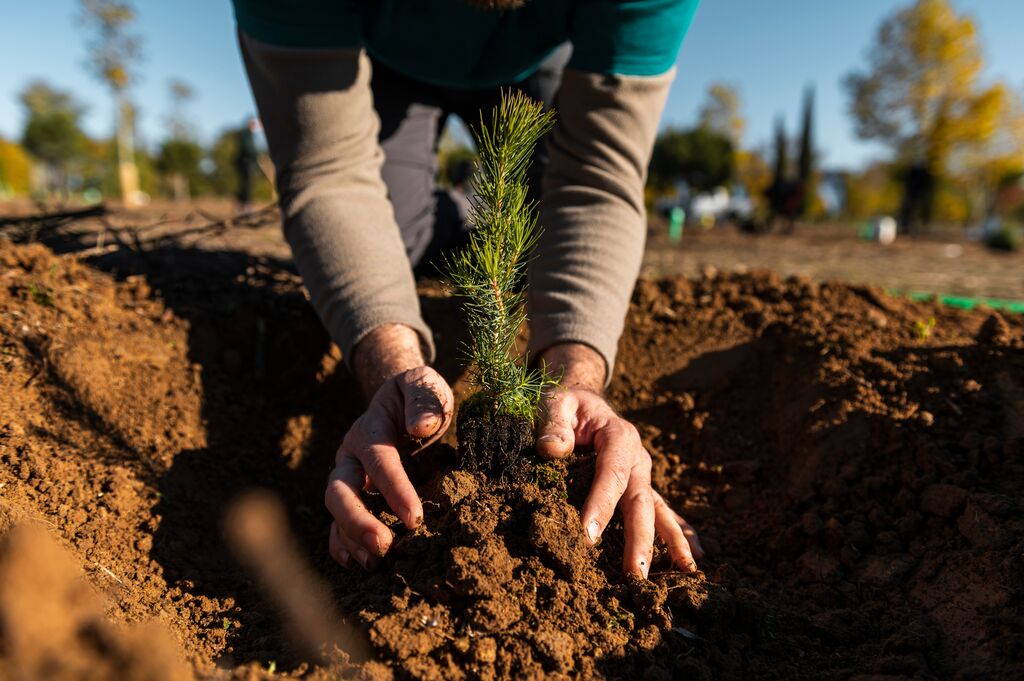
In 2025 we initiated our nature sequestration strategy in line with our ambition to restore 75,000 hectares of nature to support people’s health, launching a significant nature regeneration and carbon sequestration project located just outside of Melbourne, Australia.
Through the purchase and regeneration of a 250-hectare farm, Bupa intends to bring back local wildlife and rejuvenate the site with more than 200,000 native trees and shrubs.
Planet health: Alice’s story
Climate campaigner Alice Aedy talks about her love of nature, the interconnection between people and the planet, and the power of storytelling in championing nature and biodiversity.
Reducing our impactNet zero by 2040
Net zero by 2040
By 2040, we aim to be a net zero business that delivers a healthy future for people and planet.
We will do this by:
- reducing the impact of our own operations, and supporting others to do the same, including many of our suppliers and network of healthcare providers
- transforming our products and services to reduce environmental impact
- innovating to deliver healthcare sustainably
- championing circularity – including work on reducing waste and increasing re-use of materials
As we do this, we’ll always keep our focus on the health and wellbeing of our customers.
Our targets
By 2040, we aim to be a net zero business across all three emissions scopes. We also aim to become net zero across scopes 1 and 2 by end 2030.
To support our net zero ambition, we have therefore set 1.5°C aligned near-term SBTs across all three emissions scopes that have been validated by the SBTi.
The Science-Based Targets initiative (SBTi) encourages companies to set science-based target in line with the Paris Agreement.
We also had an interim end 2025 target to reduce our scope 1 and 2 (market-based) emissions across our global operations by at least 40% by end 2025 from 2019 baseline. We exceeded this target by achieving a 62% reduction.
Our validated science-based targets are:- reduce scope 1 and 2 (market-based) emissions across our global operations by at least 46.2% by end 2030 from 2019 baseline
- reduce scope 3 emissions by at least 63% by 2034 from 2019 baseline
- align our portfolio of corporate bonds, loans and listed equities to 1.5°C by 2040
This supports our ambition to be net zero by 2040.
Reducing our direct emissions
In 2025, we continued to make good progress in decarbonising our scope 1 and 2 (market-based) GHG emissions, achieving a reduction of 62% from our 2019 baseline, exceeding our interim 2025 emissions reduction target. We also maintained our commitment to securing renewable electricity, moving from 94% in 2024 to 96% in 2025, compared to our 2019 baseline of 54%. We procure 100% renewable electricity across our operations in Australia, New Zealand, Hong Kong, Spain, Türkiye, Mexico, Poland and India.
Reducing our indirect emissions
Responsible investment
Helping to reduce emissions through responsible investment is an essential part of our sustainability strategy.
During 2024, we updated our Sustainable Investing Framework. The aim of the new framework is to continue management of ESG risk by incorporating sustainability factors in investment decisions, while improving the positive impact of our portfolios on society and the environment.
Read more about Responsible investment.
Sustainable procurement
We’re working towards ensuring our suppliers and other partners (including healthcare providers) are also committing to reducing their own emissions.
In 2025, we continued to strengthen our sustainable procurement and supplier engagement programme. This included an increased focus on supplier alignment with Bupa’s climate goals through supplier engagement, education and contractual clauses.
We have made progress on our global initiative to increase the amount of procured technology goods and services (by spend) that come from suppliers who share our Net Zero ambitions1, exceeding our 75% target by hitting 78% for the first time in 2025, an improvement from 73% in 2024. We also have a global supplier engagement programme focused on our largest 100 suppliers.
1 We consider companies to be aligned if they a) are committed to near-term targets via SBTi or an equivalent external initiative, and b) have set an overall net zero year of 2050 or sooner across all scopes, or 2030 or sooner across scopes 1 and 2 only.

Healthcare’s impact on the planet and what we can do about it
Find out more about how we're focusing on practical solutions to reduce the environmental impact of healthcare and supporting others to do the same.
Next-generationhealthcare
Blua Sanitas Valdebebas Hospital
In 2025 our Spanish business Sanitas opened the Blua Sanitas Valdebebas Hospital in Madrid, a next‑generation digital hospital built to the highest sustainability standards.
The hospital runs on 100% renewable electricity, supported by photovoltaic panels, and achieves a 94% reduction in CO₂ emissions compared with the Spanish hospital‑sector average.
It also uses technology to minimise energy use, provides digital tools that reduce travel and features green roofs plus a nearby area with almost 3,000 trees.