Everyone has their own unique biology, behaviours, medical history and health priorities. When care reflects that, it becomes more precise, more human – and ultimately more effective.
Conversations can focus on what matters to each person. Decisions can be grounded in science and lived reality. Sickness can be avoided before it happens. But personalising care is complex, so how do we make it a practical reality?
We speak to Professor Melvin Samsom, Chief Medical Officer at Bupa Group and one of Europe’s most experienced physician executives. Here he sets out a practical case for achieving personalised healthcare today, to help improve outcomes and give clinicians and patients the tools to make better decisions together.

Personalised healthcare means choosing the right next step for each person, giving consideration to their health, their situation and what matters to them.
Professor Melvin Samsom
Group Chief Medical Officer
In brief:
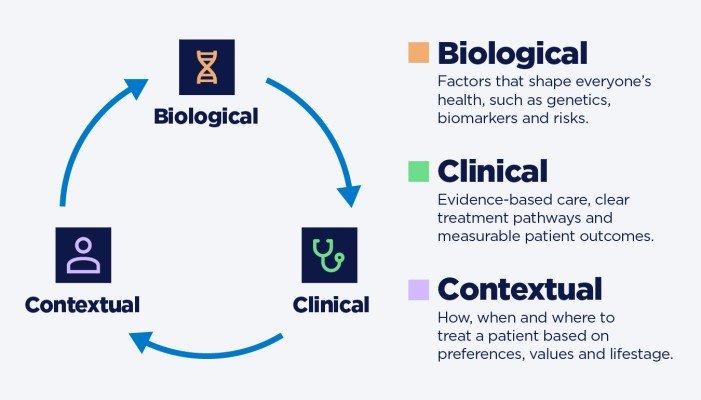
- Personalisation includes biological, clinical and contextual factors
- Listening carefully to patients is a key foundational step
- Personal data must be integrated across all care settings
- Technology can help clinicians by reducing workloads
- Patient satisfaction depends on simple, seamless access
How to achieve effective personalisation
1. Patient understanding
Personalisation starts with understanding each individual patient. Structured medical histories and real-time health data give clinicians a fuller picture – for care plans that reflect real life, not averages. Key elements to understanding a patient’s health needs include biological, clinical and contextual factors.
2. Connecting the biological and clinical picture
Every piece of information a patient feels comfortable providing can help connect care settings. Data such as health-tracking results or a DNA profile can feed into AI and precision tools to make care:
- Personalised – right for the patient
- Predictive – problems are identified earlier
- Preventive – illness is avoided where possible
Access to population-scale data strengthens this further, giving clinicians evidence-backed insights they can then apply to their individual patients.
3. Helping clinicians do what they do best
AI can be an important assistant in the clinic. Automating administrative tasks using AI tools has been shown to save clinicians up to 13.5 hours per week. This improves clinical productivity and, importantly, protects time to connect with patients.
Administration is just the beginning. AI is a powerful tool for personalising care, from helping to surface insights to improving the accuracy of care. In Spain, Bupa’s AI-powered mental health service, Cuida Tu Mente (Take Care of Your Mind), uses daily check-ins to generate personalised support and identify early areas of concern. It can then seamlessly connect people to digital tools or a therapist if needed.
4. Building a digital gateway to better health
Digitisation in everyday life has shaped people’s expectations for frictionless services that feel bespoke to them. Music apps learn to recommend the types of music you enjoy. You can complete your regular grocery order with a tap of a smartwatch. Our view is that health should be as seamless and as personal to you.
Solutions such as Blua, digital health by Bupa, make healthcare more personal, enabling people to access care when and where they need it, and empowering them to proactively manage their physical and mental health.
A new era has begun
Putting the individual at the heart of healthcare is a technological challenge as well as a clinical one. But by building from the principles outlined here, personalised health has the potential to make care more sustainable, better trusted and highly effective.
As new breakthroughs become mainstream, personalised health will quickly go from the next big thing to the new standard, with patients and clinicians alike ready to benefit now. It promises exciting times for us all.