Business founders often work under constant pressure, and the demands of running a business can put them at significantly higher risk of mental health issues.
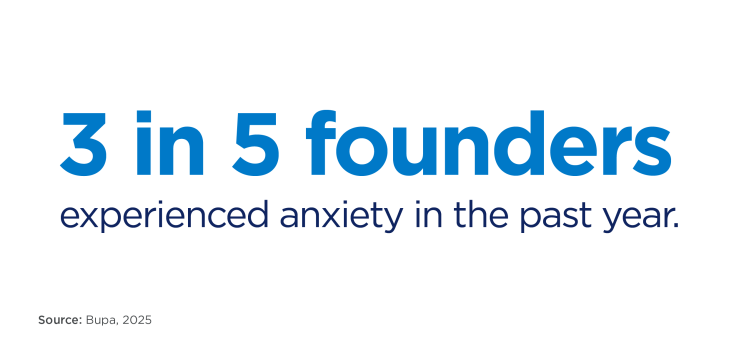
Bupa’s research shows that three in five founders experienced anxiety in the past year. More than half reported sleep disturbances, and one in two experienced periods of low mood or persistent sadness. Notably, over a third said they had felt a loss of motivation at work.
As a former founder myself, I know how important it was to look after my own mental health in order to lead a team – especially during uncertain periods and the inevitable road bumps along the way.
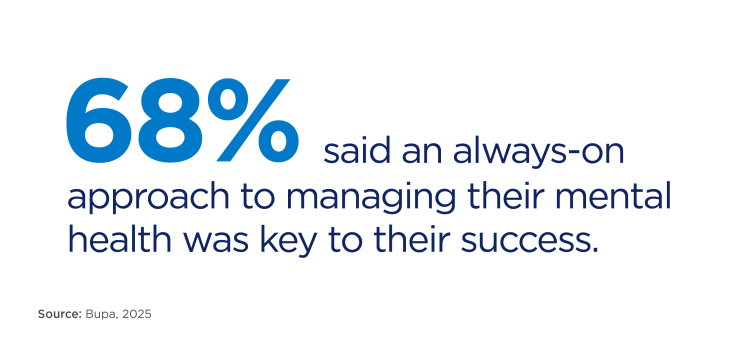
From experience, I’ve seen how putting simple, everyday habits in place to stay mentally well can help founders lead and grow their businesses. Bupa’s research reflects this: sixty-eight per cent said an always-on approach to managing their mental health was key to their success.
So should business owners be doing more to protect their mental wellbeing?
1. The business impact: why good mental health can support success
There is a positive link between proactive mental health management and business performance. Founders expecting strong growth next year are twice as likely to take proactive steps to manage their mental health compared with those anticipating lower growth.
Poor mental health can also have business consequences beyond the bottom line: founders say it affects leadership, increases the risk of staff turnover and lowers productivity.
Marita Cheng, founder of AI and robotics companies Aubot, Aipoly and Robogals, believes a founder’s mindset sets the tone for the wider team: “As a founder, how you show up mentally sets the tone for your whole company. When I’m rested, positive and calm, that energy ripples through my team.”
Proactive mental healthcare can support healthier leaders and healthier businesses, so how do we put it into practice?
2. What proactive care looks like: small habits, big impact
Proactive mental healthcare is built on small, consistent habits rather than major lifestyle shifts.
David Abrahamovitch, founder of coffee chain Grind, describes the everyday habits that help him switch off and reset: “Being proactive about my mental wellbeing isn’t about dramatic life changes – it’s about small, practical habits that create space to switch off and recharge. For me, that means putting my work phone away, exercising, reading or listening to music.”
Bupa’s research shows that many founders still take a reactive approach to support. Three in five only seek therapy or counselling once something prompts them to, while just two in five proactively look for support earlier. This illustrates the gap between knowing what helps, and building the habits to do it consistently.
3. The next step: making proactive care easier with Mindplace
Bupa is investing in 200 Mindplaces worldwide by the end of 2027, with 50 launching this year. These dedicated mental health spaces offer a range of therapy programmes, available as walk-in services or by appointment. Each session is run by qualified professionals, trained to support people before feelings of anxiety or stress escalate.
With Mindplace, Bupa aims to help founders access support earlier, build healthier habits and create conditions where both people and businesses can thrive.
As Bupa CEO Iñaki Ereño notes: “Our research shows that an always-on approach to mental health is key for personal wellbeing and integral to business success. Yet even leaders who recognise this fact don’t always find it easy to engage proactively with their mental health.”
By making proactive mental health part of everyday life, founders can build the resilience and clarity they need to succeed – creating healthier, more sustainable workplaces for everyone.